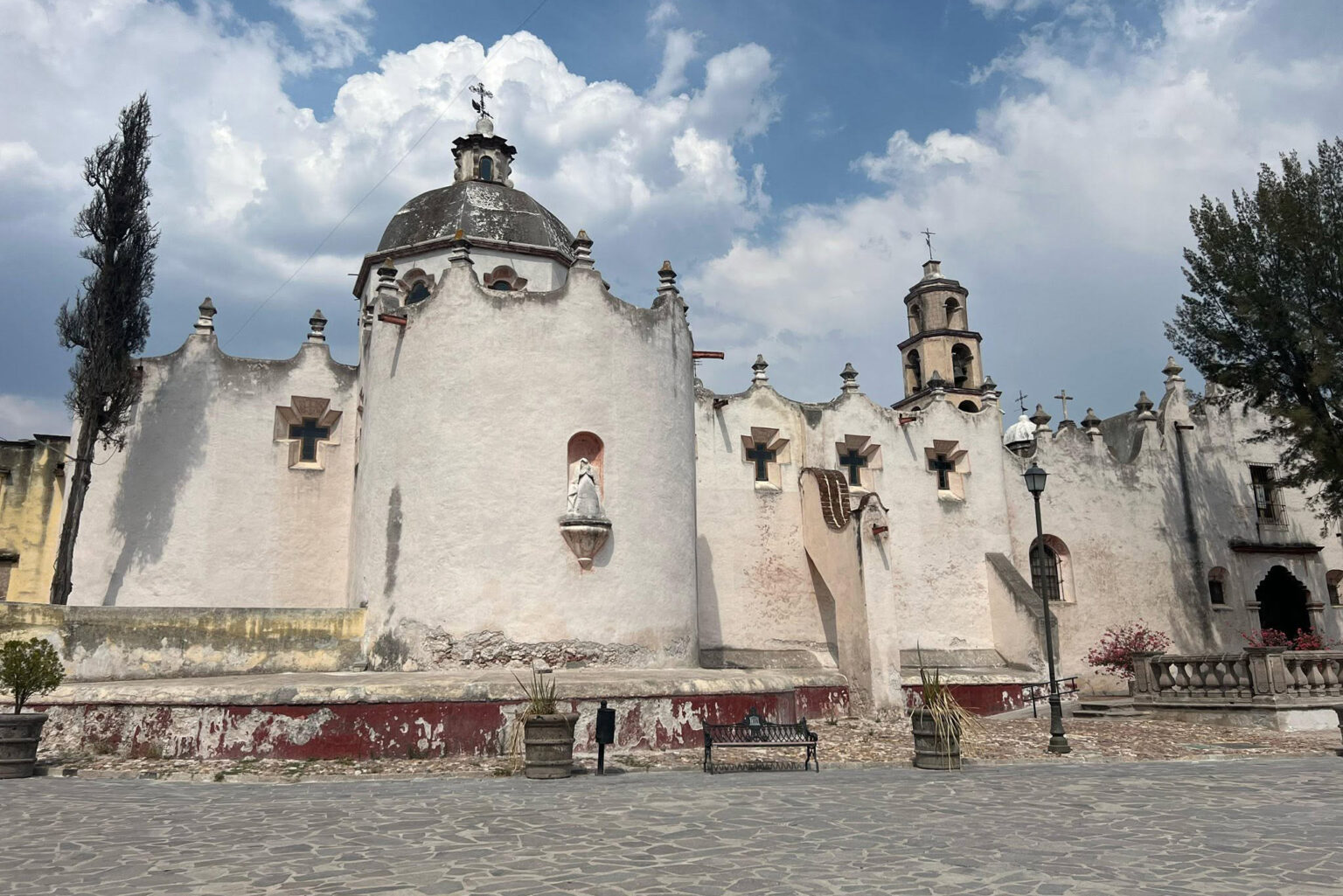
Just 15 kilometers from the cosmopolitan bustle of San Miguel de Allende, Guanajuato’s semi-arid landscape is home to one of Latin America’s most imposing artistic and historical treasures. Seen from the outside, the Sanctuary of Jesus Nazarene of Atotonilco impresses with its high and defensive walls of austere white, evoking more a colonial fortress than a temple of prayer. However, to cross its threshold is to enter a visual universe that challenges the senses.
With good reason, this eighteenth-century architectural complex has been baptized worldwide as the “Mexican Sistine Chapel”, a title that falls short of the devotion, art and history that are breathed in its naves.
Why the “Mexican Sistine Chapel”?
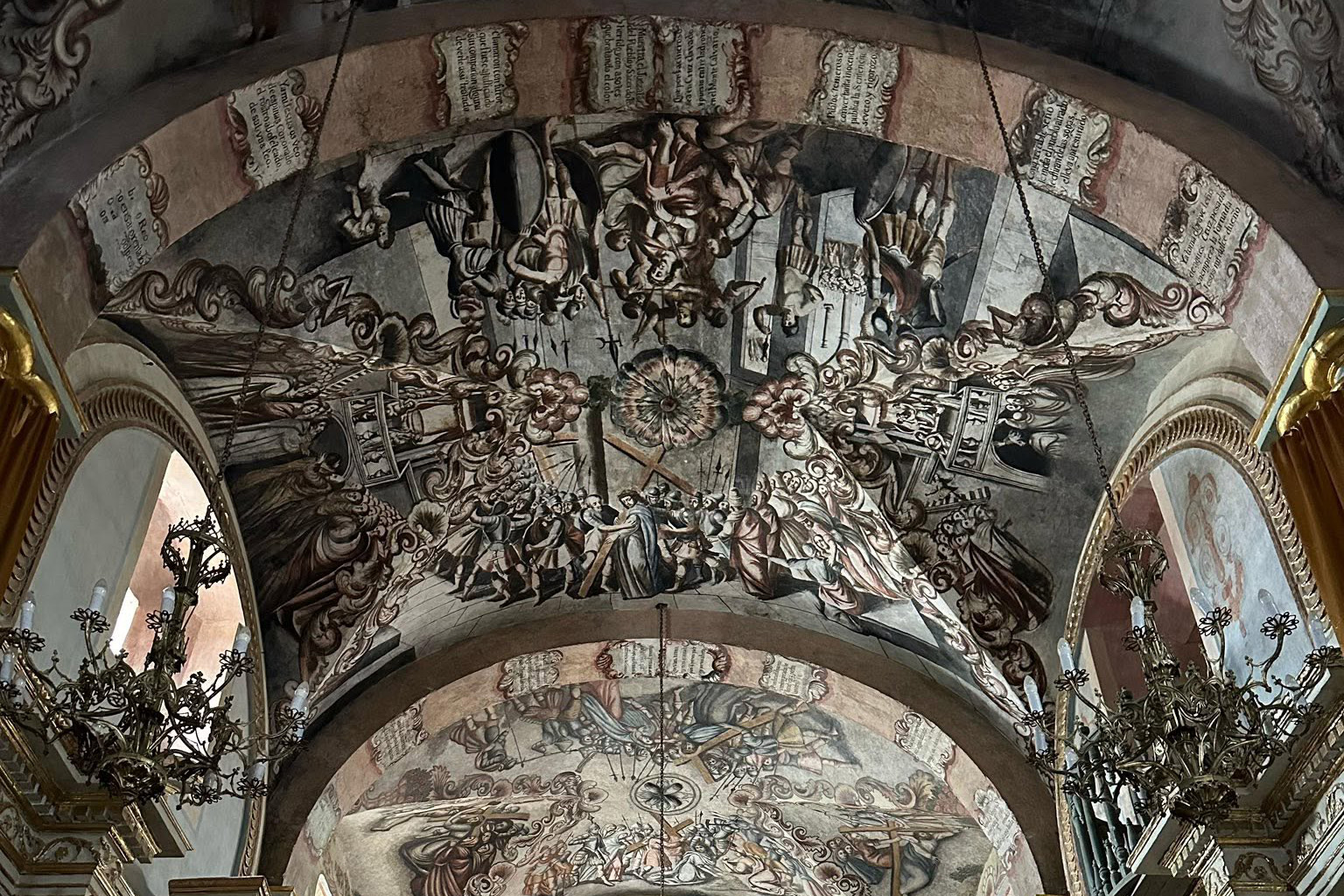
The analogy with Michelangelo’s masterpiece in the Vatican is born from the overwhelming richness of its ceilings and walls. For more than thirty years, the New Spanish painter Miguel Antonio de Pocasangre dedicated his life to capturing the Passion of Christ in every available corner of the sanctuary, using the fresco technique combined with tempera paint.
Unlike the European Renaissance order, Atotonilco is the maximum expression of folkloric or indigenous baroque. There is not a single free space for expression; The density of the images obeys the concept of horror vacui (the fear of emptiness).
The scenes move between dramatic rawness and poetic delicacy, adorned with religious verses, local flowers and cherubs with mestizo features. The frescoes not only had an aesthetic purpose, but also a pedagogical one: they were a monumental “open Bible” designed for evangelization in an area of constant conflict with the Chichimeca peoples.
The epicenter where a homeland was born
The value of Atotonilco transcends the canvases. This sanctuary was founded in 1740 by the Jesuit priest Luis Felipe Neri de Alfaro, who sought to create a spiritual retreat space inspired by the Holy Sepulchre in Jerusalem. But the fate of the temple would change forever on September 16, 1810.
Hours after giving the Grito in Dolores, the priest Miguel Hidalgo y Costilla marched with his incipient insurgent army towards San Miguel el Grande. As he passed through Atotonilco, Hidalgo entered the sanctuary and took from the sacristy a canvas with the image of the Virgin of Guadalupe, tying it to a wooden spear.
That act made the Guadalupana the first flag of the insurgent movement and the symbol of union of an entire nation in struggle. Atotonilco not only witnessed the birth of the liberating army, but also gave a mystical identity to the independence cause.
From penance to World Heritage
For centuries, Atotonilco has been a magnet for religious tourism, famous for its spiritual exercises that attract thousands of pilgrims annually to perform intense rites of penance and prayer. However, in recent decades, the profile of the visitor has evolved drastically.
In 2008, UNESCO inscribed the Sanctuary of Atotonilco, along with the Protective Village of San Miguel de Allende, on the list of Cultural Heritage of Humanity. The international organization recognized the outstanding universal value of its architecture and interior decoration, consolidating it as a must-stop for cultural tourism, history lovers and photography enthusiasts from all over the world.
Leave a Review