There are destinations in Mexico that are visited for their beauty and others that are visited for the pride of stepping on history itself. Dolores Hidalgo, Cradle of National Independence, Magical Town of Guanajuato, manages to merge both worlds. It is a place that invites you to walk slowly through its tree-lined squares, taste exotic artisanal ice cream, admire the majolica and local pottery, and listen to the echo of history in each of its corners.
Getting to Dolores Hidalgo from the state capital or from neighboring municipalities such as San Miguel de Allende or Guanajuato capital is extremely easy by road, which makes it a perfect weekend getaway or a key point on the route through the heart of the Bajío.
The historic heart: walking through the cradle of the Homeland
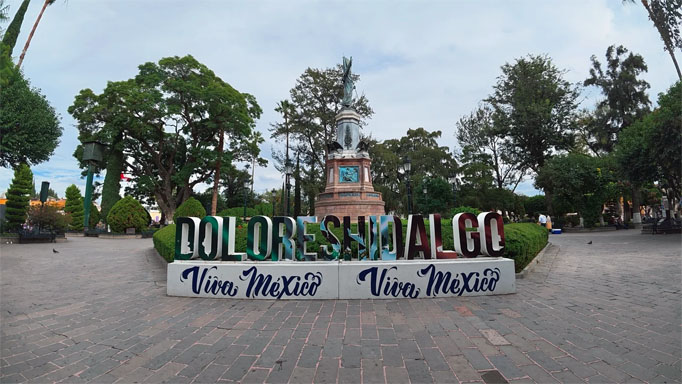
Our visit begins in the Main Garden (Plaza del Grande Hidalgo), the daily pulse of the town. Sitting on one of its benches while enjoying a traditional artisanal ice cream – with flavors as unique as garambullo, chicharrón, camarón, borrachita or tequila – is the welcome ritual par excellence.
On one side of the garden stands majestically the Parish Church of Nuestra Señora de los Dolores, with its dazzling Churrigueresque façade from the eighteenth century. To be in front of its atrium is to evoke the early morning of September 16, 1810, when the priest Don Miguel Hidalgo y Costilla gave the emblematic Cry of Independence.
Just a few steps from the center is the Casa de Don Miguel Hidalgo (Casa de Hidalgo Museum), the building where the Father of the Nation lived. By walking through its courtyards and well-preserved rooms, it is possible to go back in time through furniture, documents and personal objects from the insurgent era.
Continuing with the first painting, the House of Don Mariano Abasolo (today the headquarters of municipal offices and exhibition spaces) and the imposing Casa de Visitas—one of the most beautiful eighteenth-century stately estates in the state—complement this triangle of viceregal civil architecture. For its part, the Museum of Independence, housed in the town’s old prison, narrates in detail the causes and development of the insurgent movement.
Music, tradition and legends
Dolores Hidalgo not only rings like historical bells; it also sounds like ranchera music. In the Municipal Pantheon is one of the most beloved cultural pilgrimage points by visitors: the Monument to José Alfredo Jiménez. This original mausoleum in the shape of a multicolored serape and a huge charro hat pays tribute to the most universal composer of Mexican popular music, favorite son of this land.
For lovers of religious art and tranquility, the center offers historic temples of great beauty such as the Temple of the Third Order (1755), the Parish of La Asunción with its eclectic façade, and the Temple of Calvary. In addition, if you are looking to explore the living faith and syncretism of its communities, a short excursion to the community of El Llanito to visit the Temple of the Lord of the Afflicted reveals one of the most deeply rooted religious and culinary traditions of the municipality.
Flavours and craftsmanship with identity
Beyond its museums, the wealth of Dolores Hidalgo lives on in its workshops of majolica ceramics and traditional pottery. Walking through its shops and artisan workshops allows you to observe how local artisans mold and paint colorful pieces that have traveled around the world by hand.
At lunchtime, the gastronomy of Dolores surprises with gorditas de horno, barbacoa, chiles de chorreadero and the traditional cuisine that its local cooks protect, pairing perfectly with the growing wine offer of the region and its nearby vineyards.
Guide to Attractions: The Spots of Dolores Hidalgo
To make sure you don’t miss any detail during your visit, we present the general catalog with the 22 emblematic points and monuments that mark the identity of this Magical Town:
Religious Architecture
- Parish of Our Lady of Sorrows: Churrigueresque historical and architectural epicenter of the Cry of Independence.
- Parish of La Asunción: Nineteenth-century temple with an eclectic façade with fresco paintings inside.
- Temple of the Third Order: Viceregal jewel with three naves built in 1755.
- Temple of Calvary: Historic temple built in several stages between the sixteenth and nineteenth centuries.
- Temple of Our Father Jesus: A traditional venue of deep local devotion.
- Temple of Help: An old chapel integrated into the historical trace of the traditional neighborhoods.
- Temple of the Solitude of Piedrita: Traditional chapel with great roots among the settlers.
- Temple of the Lord of Health: Sacred precinct representative of the viceregal and community faith.
- Santa Anita Temple: Religious site characterized by its simplicity and historical value.
- Temple of the Lord of the Hospital of the Salamanca: Chapel linked to the welfare history of the colonial era.
- Temple of the Holy Cross: Neighborhood chapel that protects popular festivities.
- Temple of the Lord of the Afflicted (El Llanito): Center of faith, syncretism and centuries-old traditions in the community of El Llanito.
Civic and Cultural Monuments
- Monument to Hidalgo: Commemorative sculpture in honor of the Father of the Nation.
- Monument to the Flag: Civic space dedicated to the national labaro.
- Monument to the Heroes of Independence: Homage to the heroes of the insurgent deed of 1810.
- Monument to José Alfredo Jiménez: Iconic mausoleum in the shape of a hat and serape in honor of the King of the Ranchera Song.
Historic Houses, Museums and Cultural Spaces
- House of Don Miguel Hidalgo (Casa de Hidalgo Museum): Casa del Cura Hidalgo adapted as a national site museum.
- House of Don Mariano Abasolo: Historic house of the insurgent hero, current municipal headquarters.
- Guest House: Eighteenth-century stately palace used for official protocol accommodation.
- Museum of Independence: Former colonial prison converted into an interactive museum of the 1810 movement.
- Mariano Abasolo Auditorium: Public venue for artistic and cultural events.
- House of Culture: Nerve center of workshops, plastic arts and local cultural diffusion.
Reasons to return
Dolores Hidalgo is a destination that does not run out in a single visit. Whether it’s touring its historic sites, singing José Alfredo’s songs in front of his grave, tasting a new exotic snow, or taking home a unique piece of majolica, the Cradle of Independence always gives you a reason to return and continue discovering the living essence of Guanajuato.
Leave a Review