The Third Festival México Negro, Nuestra Tercera Raíz, will offer in San Miguel de Allende cinema, conferences, workshops and music about the Afro-descendant presence
If you visit San Miguel de Allende between September 1 and 5, you can be part of the Third Festival México Negro, Nuestra Tercera Raíz, a meeting that brings together for five days activities related to the history, identity and cultural expressions of Afro-descendant communities in Mexico. The main venue for the program will be the Public Library and its Santa Ana Theater, in the Historic Center, with conferences, cinema, music, dance and puppet theater. Most of the programming will be free of charge, while some functions include a fee or donation.
The festival reaches its third edition after having begun in 2024 as an initiative of La Biblioteca to address the presence of Afro-descendant people in Mexico through conferences, film, music and dance. In 2025 it had a second free edition with the participation of filmmakers and specialists in Afro-descendants.
What activities can you enjoy at the festival?
This year’s program begins on Tuesday, September 1 at 5:20 p.m. with the screening of La Negrada, a film directed by Jorge Pérez Solano and produced in Mexico in 2017. The film follows Magdalena and Juanita, two women related by Neri, husband of one and lover of the other, within a community on the coast of Oaxaca where the so-called “queridato” is part of social relations.
On Wednesday, September 2, the program will continue with a discussion of Michael Roemer’s *Nothing but a Man*, followed in the afternoon by a concert by the Jazz-Fro-Funk Collective. Donations of 133 and 550 pesos, respectively, are requested for this day’s events.
On Thursday, September 3, the activities will focus on the history of San Miguel de Allende and the presence of Black and mixed-race populations in Mexico. At 11 a.m., historian Rafael Castañeda García will deliver a lecture titled “San Miguel Was Also Afro: Slavery, Freedom, Brotherhoods, and Daily Life in the History of San Miguel el Grande.”
Castañeda García holds a Ph.D. in History from El Colegio de Michoacán, is a researcher at the Institute for Research on the University and Education at UNAM, and is a professor in the History program at the Acatlán School of Higher Studies. His research includes the history of religious practices among Black and mixed-race people in Spanish America during the 17th and 18th centuries.
Castañeda García holds a Ph.D. in History from El Colegio de Michoacán, is a researcher at the UNAM Institute for Research on the University and Education, and is a professor in the History program at the Acatlán School of Higher Studies. His research focuses on the history of religious practices among Black and mixed-race people in Spanish America during the 17th and 18th centuries.
That same day, there will be a screening of *Who We Are: A Chronicle of Racism in America*, a lecture on the presence of people of African descent and the African diaspora in Mexico, and the *Muñecas Negras Abayomi* workshop, open to participants ages seven and up.
Animated films will be featured
The film program also includes *Nyanga*, an animated short film directed by Medhin Tewolde Serrano. The film, produced in Mexico in 2023, is based on the life of Gaspar Yanga, who was kidnapped in Africa, enslaved, and taken to colonial Mexico. The story explores his resistance and struggle for freedom through a first-person narrative and a combination of shadow theater and handcrafted animation.
Also screening will be *Coronas Negras* by André Lô Sánchez, a production that uses the hairstyles of four people of African descent from Senegalese families living in Mexico to explore identity, memory, and belonging.
On Friday, September 4, the day will begin with a puppet show by Mulato Teatro and continue at noon with the lecture “Highlighting the Existence of the African American Community and the Afro-descendant Diaspora in Mexico: Colonial and Contemporary History,” presented by Tanya Duarte.
Duarte was born in Mazatlán, Sinaloa, and has spent more than three decades working as a feminist and anti-racist activist and as a human rights advocate for the Afro-Mexican and Afro-descendant communities. In 2022, she was named by Forbes Mexico as one of the country’s 100 most influential women and received an award from the French Embassy. In 2024, she was awarded the Global Anti-Racism Champions Award by the U.S. Department of State. She also founded and directs the academic project Afrodescendencia México, developed in collaboration with the University of Veracruz and the National Autonomous University of Mexico (UNAM).
Activities for Children
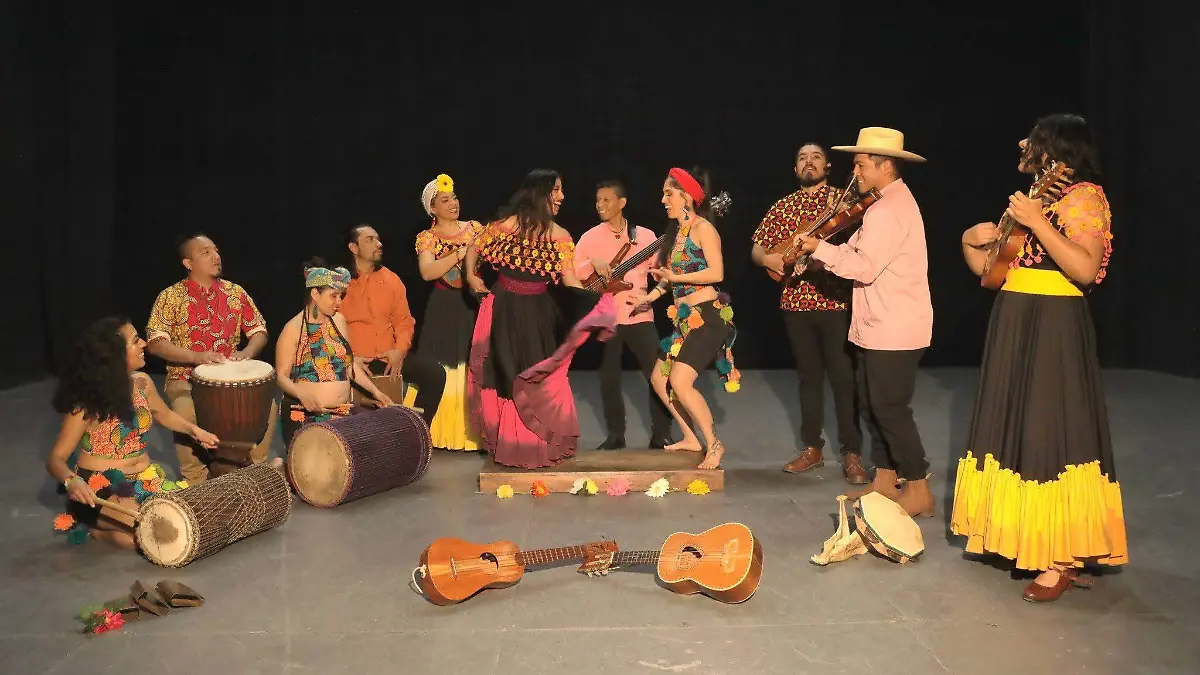
Friday’s program will conclude at 6:30 p.m. with *Sangre Negra*, a performance by AfroSon at the Santa Ana Theater. The show brings together music, song, and dance from regions of Mexico linked to African heritage. The show features nine pieces that explore expressions such as Huastecan foot-stomping, Chontal rhythms from Tabasco, Jarocho singing, and the coastal son of Oaxaca, while establishing a dialogue between Mexican son and African, Moorish, and Caribbean rhythms.
AfroSon is composed of Luis Jesús Cibrian, Ignacio Piñón Pérez, Susana Yarely Álvarez Campos, Ana Elizabeth Piñón Pérez, Anatolij Tkatchinski Pérez, Georgina Cortés Serna, Djin Djin, and Héctor Jairo Oswaldo Gaona.
On Saturday, September 5, the festival will conclude with activities for children, a lecture on the African presence in the history of Guanajuato, presented by historian María Guevara Sanginés, and the concert ¡Gran Baile de AfroCumbia!, performed by Corporativo Mexicano de Cumbia.
Guevara Sanginés holds a Ph.D. in History and Ethnohistory from the National School of Anthropology and History and is a full-time professor at the University of Guanajuato. Her research has focused on the history of Guanajuato, cultural heritage, and the African presence in Mexico. She has also held positions related to the preservation of archives and historical heritage.
The festival also features the work of Mulato Teatro, a theater company founded in Mexico City in 2005 by the Afro-Colombian-Mexican actress Marisol Castillo and the Swiss-Mexican playwright Jaime Chabaud. Over the course of its two decades of activity, the company has produced plays related to Africa, Afro-descendant heritage, and cultural resistance, in addition to participating in national and international festivals.
For five days, San Miguel de Allende will become a gathering place to hear historical research, discover film productions, engage with the work of artists of African descent, and appreciate musical, dance, and theatrical expressions related to the African presence in Mexico.
For those who will be in the city during those dates, the México Negro Festival offers a program that can be incorporated into a tour of the Historic Center: morning lectures, films, and workshops during the day, and musical performances in the afternoon. The Public Library is located at Insurgentes 25, in the downtown area, and the Santa Ana Theater is part of this venue.
The Third México Negro Festival, “Nuestra Tercera Raíz,” is being held through the Guanajuato 2026 State Fund for Culture and the Arts grant program.
Leave a Review