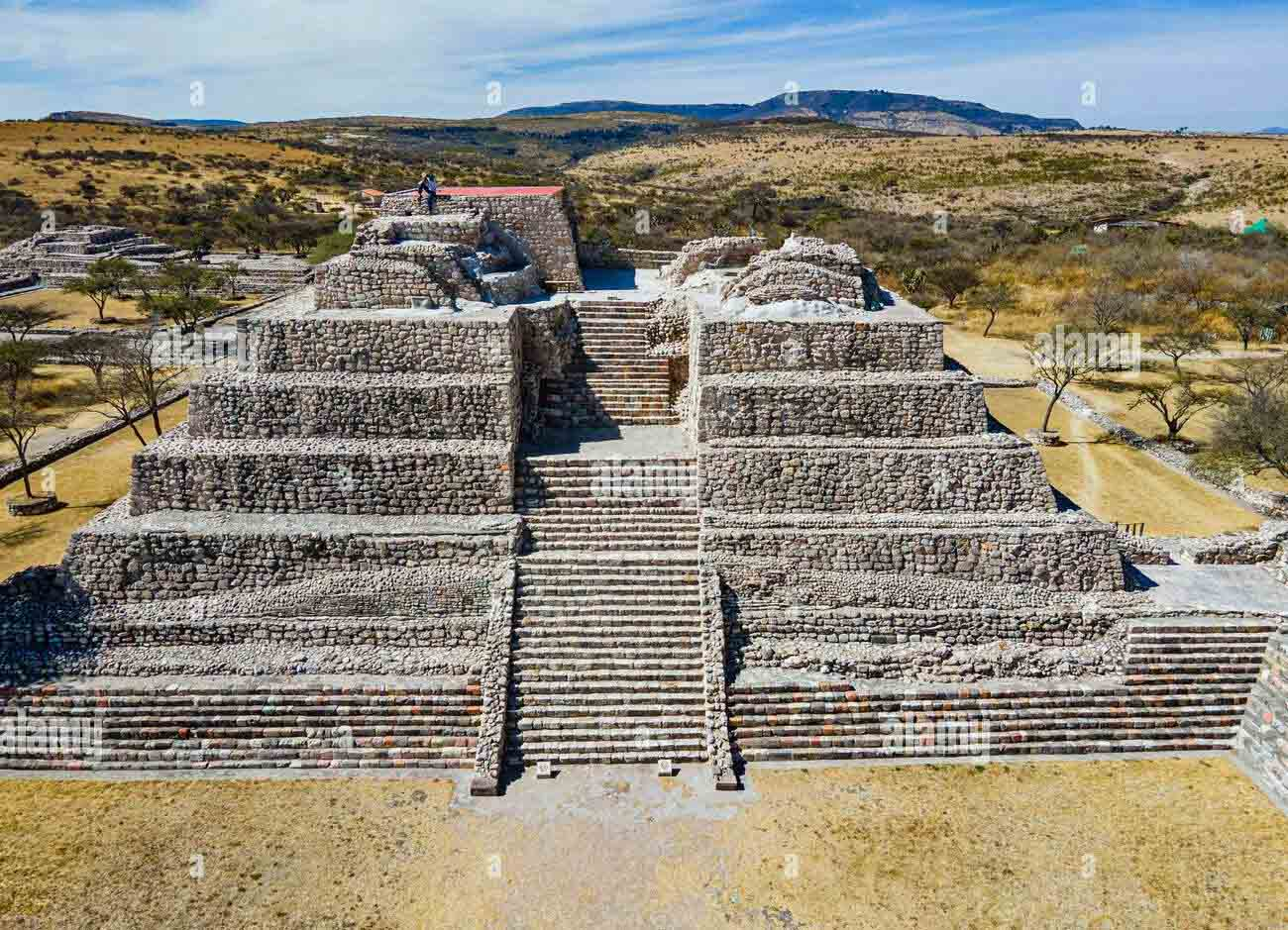
Guanajuato, Gto., The Cañada de la Virgen archaeological zone, in the municipality of San Miguel de Allende, will reopen today to the public after the expropriation process of 701 hectares promoted by the federal government to protect the pre-Hispanic site and guarantee its preservation.
In the historic Alhóndiga de Granaditas, the director of the National Institute of Anthropology and History (INAH), Joel Omar Vázquez Herrera, said that the place, considered one of the most important heritage spaces in Guanajuato, will begin a new stage with greater participation of Otomi and Chichimeca indigenous communities.
“To reach this moment, the INAH has implemented actions to fence the site and not only delimit it, but also protect the pre-Hispanic heritage.”
The official pointed out that “the National Institute of Indigenous Peoples and the government of Guanajuato have worked hand in hand with us to have a closer relationship with the Otomi and Chichimeca peoples.”
The reopening will strengthen the relationship with the native communities to guarantee the safeguarding of the site, as well as access to and enjoyment of the place. The archaeological site and its accesses, he added, belong to the community and are intended for public visitation. “This sacred place will be open to continue the customs and traditions of the communities.”
The intention is to involve the native peoples in a symbolic ritual on the occasion of the reopening, scheduled for 24 May. On February 10, the Ministry of Culture of Guanajuato reported that the site was closed due to legal actions taken by the INAH.
During the presentation, the advisor to the Presidency of the Republic and former senator Jesusa Rodríguez recalled that since 2000 there was an intention to recover the original polygon of more than 700 hectares to guarantee the conservation and research of the pre-Hispanic settlement.
He explained that the recovery of the place is also part of the recognition of the rights of the native communities, in the context of the Chichimeca-Otomí Justice Plan and the second article of the Constitution.
“The recovery of the Mexican government did not occur abruptly, as some say. For more than four years, the INAH sought a dialogue with the Cañada de la Virgen company to find the best solution, but the latter maintained its refusal to any exchange.”
The decree of expropriation for public utility of 701 hectares, signed by President Claudia Sheinbaum Pardo on December 30, 2025, entered into force on January 6, 2026. Days later, federal cultural authorities, with the support of the National Guard, took possession of the expropriated polygon.
Rodríguez denounced that the Cañada de la Virgen company incurred in “provocations, threats and destruction of federal property.”
The surrounding indigenous communities, he added, will have free access to the site and will be able to make offerings in the place. “We celebrate the reopening of Cañada de la Virgen and the implementation of a management plan and multiple activities that the people of Mexico will be able to enjoy.”
For her part, the head of the Ministry of Culture of Guanajuato, Lizeth Galván Cortés, pointed out that the archaeological site is one of the most valuable spaces of the cultural heritage of the entity.
“Culture unites, creates bridges and has the ability to build community, even in the most complex moments; that is why we celebrate continuing to work in a coordinated manner with the government of Mexico.”
Leave a Review